Firelight is pioneering a new model in DeFi: staking tied to DeFi cover. At the heart of this is stXRP, a token that represents staked XRP on the Firelight Protocol. In Phase 2 of the protocol, stXRP represents a tokenized claim on capital that backs DeFi cover, protecting assets across the broader ecosystem.
Firelight Protocol

Firelight is pioneering a new model in DeFi: staking tied to DeFi cover. At the heart of this is stXRP, a token that represents staked XRP on the Firelight Protocol. In Phase 2 of the protocol, stXRP represents a tokenized claim on capital that backs DeFi cover, protecting assets across the broader ecosystem.
While stXRP can be used freely across Flare DeFi, it is tied to real risk and real claims in Phase two. Therefore our primary priorities for stXRP are capital safety and protocol solvency. This foundational principle will shape how Firelight Points, the protocol’s incentive mechanism, are distributed across DeFi integrations.
The Vision of stXRP in DeFi
AMMs
AMM liquidity is a core component for stXRP. On top of supporting price stability of stXRP, it allows users to gain access to stXRP exposure quickly when protocol vaults are capped. Additionally, AMM liquidity provides a method for users to exit their positions without having to wait for the unstaking period.
Deep stXRP liquidity will provide a secondary market for Firelight’s cover product. We envision this use case to have continuing importance as the protocol develops.
Money Markets
As Firelight transitions from the Launch Phase to the Feature Complete Phase, the risks on stXRP will evolve. During the Launch Phase there are no slash risks to the asset. However, as the cover module goes live in phase 2, slashing will be activated. This means that if a valid cover claim is submitted, the value of stXRP may drop as a slash is enforced. Accordingly, stXRP is not well-suited to serve as collateral within money-market protocols.
While the Firelight Protocol will continue to operate after a slashing event, sudden changes in stXRP value could cause resulting bad debt in money markets. As such, if stXRP is heavily utilized as collateral in a lending protocol, this risk could create a bad debt event that could result in a systemic risk to the protocol or the ecosystem.
However, DeFi is permissionless. Users and protocols will create markets where they see demand. If stXRP is to be used as collateral in money market protocols, the markets ideally are modular and isolated to pairings of one collateral and one debt asset. This in theory would isolate the risks to the ecosystem and allows users to interact with the protocol while reducing potential exposure.
Other DeFi Protocol Categories
AMMs and money markets are the largest protocol categories in DeFi but not the only ones. Other types of DeFi categories that stXRP could be utilized in will follow the same principles highlighted in the sections above.
Provide secondary market pricing on stXRP or its potential future rewards
Isolate exposure only to users that want to engage with Firelight and stXRP
As the Flare ecosystem grows, these will be the core components that Firelight uses to determine the point eligibility on protocols.
Point Boost Breakdown for Cap 1
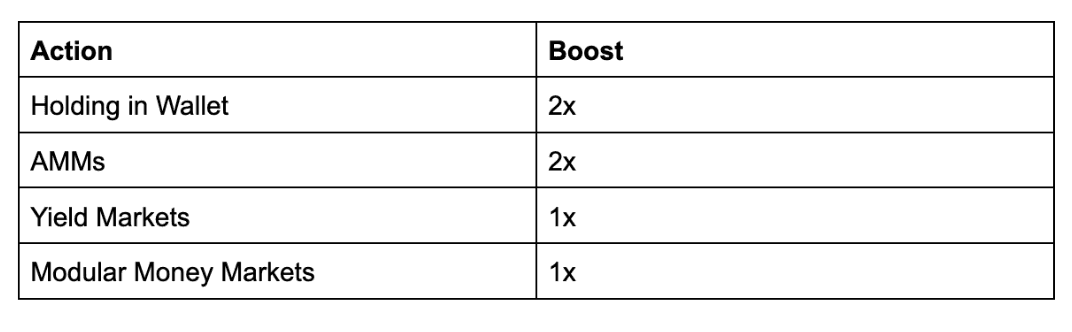
As stXRP adoption in DeFi has grown, we’ve received many questions about how points are awarded for DeFi activity. The table below outlines the points structure and the applicable boosts.
Points are not currently visible, but once integrations for supported protocols and pools go live, they will be retroactively awarded to users based on their activity. Head to our official Discord for an updated list of point earning pools and markets.
Please note: the categories and boosts below are illustrative, and being in a category does not automatically make a protocol eligible for points.
Point Allocations for stXRP
The Path Ahead
Firelight’s approach to points accrual reflects our commitment to protocol solvency and safety. We’re intentional with how stXRP fits into the broader landscape with AMM liquidity being our highest priority integration, supporting price stability, accessibility, and enabling a secondary market for Firelight’s cover product. In terms or money markets, we’re supportive of modular money markets, which isolate the risks from the broader ecosystem.
The points structure for Cap 1 reflects these priorities, rewarding activities that strengthen the protocol’s foundations while giving users clarity on how their DeFi participation translates to Firelight Points. As the Flare ecosystem evolves, we’ll continue refining these guidelines to support sustainable growth for both Firelight and the protocols building alongside us.
Stay tuned for further updates on all our official marketing channels.